Showing posts with label can. Show all posts
Showing posts with label can. Show all posts
Monday, April 24, 2017
For All Networks Fiber to Where You Can Make Money is the Issue
For All Networks Fiber to Where You Can Make Money is the Issue
"Fiber to where you can make money" is a good way to evaluate various fixed network access methods. For cable TV operators, the issue is fiber deep into the neighborhood. For some telcos, that is the same issue.
For some telcos, fiber to the premises is the choice, but the issue of revenue generated by such networks remains.
For fixed wireless networks, the issue is fiber to tower or building. For mobile operators, the issue is fiber to the macrocell or fiber to the small cell.
In other words, the issue is not the choice of physical media, or the topology, but the revenue that any given deployment can generate. And, at a time when voice revenues are declining, and where facilities-based competition exists, the financial returns from fiber to the home often are questionable.
The choices are even more difficult for any telco operating in a market where cable TV firms are active, serious competitors. Stranded assets then are the real issue, as up to 60 percent of deployed assets can routinely be stranded (assuming cable TV gets 40 percent to 45 percent share, the telco gets 40 percent share, while other suppliers get 15 percent to 20 percent market share.
In other words, the issue is to deploy “fiber to where you make money.” That is true for all fixed network suppliers, including cable TV firms using hybrid fiber coax technology.
Assuming fiber is deployed rather deep into the network, coaxial cable can carry huge amounts of bandwidth.
Go to link for download

Can Connected Health Help With Widespread Pain Issues
Can Connected Health Help With Widespread Pain Issues
More than half of U.S. adults (125 million) had a musculoskeletal pain disorder in 2012, according to the U.S. Centers for Disease Control. Though it is not yet clear that connected health devices can help people manage or alleviate such pain, the wide extent of such problems suggests the potential for such innovatins.
Just over 20 percent of U.S. adults had arthritic conditions (22.1 percent) or lower back pain (20.3 percent). A smaller percentage of persons reported having non-arthritic joint pains or other joint conditions (17.5 percent) and neck pain or problems (14.3 percent).
Some 9.8 percent had sciatica issues. A significant proportion of the population reported having at least one other musculoskeletal problem that was not examined independently (28.1 percent).
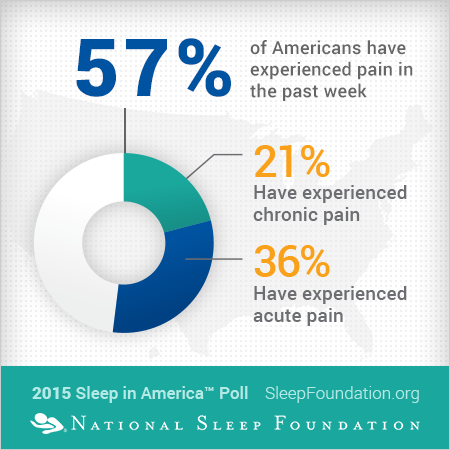
Pain also is correlated with another problem, namely lack of sleep. The 2015 Sleep in America Poll found that pain is a key factor in “sleep debt:” Some 21 percent of people have experienced chronic pain and lose 42 minutes of sleep due to it; 36 percent have experience acute pain, resulting in 14 minutes of lost sleep each night.
Go to link for download
Thursday, April 20, 2017
How Many Service Providers Can Escape Dumb Pipe Status
How Many Service Providers Can Escape Dumb Pipe Status
One universally hears service provider executives arguing they want to avoid becoming “dumb pipe” connectivity providers. What is not so clear is how many service provider entities will actually be able to do so in a significant way.
For many--perhaps most--suppliers, being an efficient dumb pipe provider is possibly the only viable path forward. The problem is that most proposed new services and applications require scale.
Whether it is entertainment video, mobile banking and payments, connected car, connected health or other Internet of Things apps, viable suppliers must achieve scale. Almost by definition, most smaller providers will be unable to do so.
That will mean an industry dominated by http://tylercaldwellphotography.blogspot.com /2016/10/by-2025-as-few-as-110-telecom-service.html" style="text-decoration: none;">10 global service providers, some predict. Those handful of firms can become branded suppliers of applications. Smaller providers will struggle to reduce costs enough to remain viable primarily as suppliers of access services.
In other words, the advice to “move up the stack” will be viable for a relative handful of firms. Most service providers will focus primarily on access. In the Internet era, that means being suppliers of “dumb pipe” Internet access.
Moving “up the stack” will be necessary and possible for the webscale global giants. Beyond some limited scenarios, smaller providers will lack the scale to create viable new application or services.
Go to link for download
Saturday, April 8, 2017
You can now check your PUK number and last recharge via mobile app
You can now check your PUK number and last recharge via mobile app
MTN Upgrade their "MY MTN APP"

You can now check PUK and last recharge through MY MTN APP. To get started, simply SMS MYMTN to 5018 and download the app free.
ENJOY...
You can now check PUK and last recharge through MY MTN APP. To get started, simply SMS MYMTN to 5018 and download the app free.
ENJOY...
Go to link for download
Friday, March 31, 2017
Can the Curve combat piracy
Can the Curve combat piracy

I have just finished Nicholas Lovell’s excellent book, The Curve. He looks at business in the post digital world and suggests that the digital world has reduced the value of many products to close to zero. This means companies are forced to find ways of offering additional benefits or services at vastly varying price points in order to succeed.
Welcome to “The Curve”.
Put simply, the Curve plots users (x axis) against the amount they are willing to spend (y axis). There are many people who will not pay anything (Lovell calls them ’freeloaders’) and a few who will pay a lot for a particular experience (‘superfans’). In the Curve, the majority of profits are made by the few superfans and moving people from freeloaders to superfans is the key to success.
The the key to the Curve is creating wide awareness of your product and generating a stable fan base by giving away good quality digital products for free. This base of ‘freeloaders’ can then be used to reach the 10% of ‘superfans’ who will pay, in some cases substantially more, for a premium version of the product or an associated service.
 |
| Welcome to the Curve |
In the Curve world, piracy is simply a marketing opportunity. He proposes three linked strategies for building a business in the digital age:
- use the web to find customers;
- use data analytics to find the best customers; and
- offer those customers a wide range of value add ons at different price points.
 |
| 3D print your own lemon squeezer? |
Clone games split an audience and dilute the number of fans. Even if your game is free, there is a risk of losing out to another free game which has copied you. Lovell would probably say that this is a competition rather than a privacy risk but in this case the two are interlinked. One competitor is making a huge leap over the other by not having to invest the time and effort in creating an original app. This is a particular issue where the name is so similar that users are clearly confused into downloading the wrong game.
Although the Curve is more relevant to digital products, Lovell does dedicate a chapter to “Make it Yourself”. As he points out, in the future, what is “digital” will be less certain as 3D printing becomes a more developed technology. This is nt just a question of Alessi lemon squeezers and Tiffany jewellery (the two examples cited in the book). For example, printing metal logos, clasps and other distinctive design features and adding them to leather bags, purses etc may become so easy that it is something users can do in the privacy of their own home.
Customising trade marks in a way that looks professional may become commonplace sowing confusion across the marketplace.
There are more barriers protecting the physical world but counting on these barriers always being there may be a mistake and a Curve plus anti counterfeiting policy should offer the best opportunities for success. Getting ahead of the problem with a strategy to embrace 3D printing is one solution which has been successfully adopted by the likes of Nike.
Lovell convinced me of the value of a curve strategy and that piracy, in some circumstances, can help to create new customers. However, I remain unconvinced that piracy is not a problem. (Perhaps this is unsurprising given my vocation!)
Go to link for download
Subscribe to:
Posts (Atom)